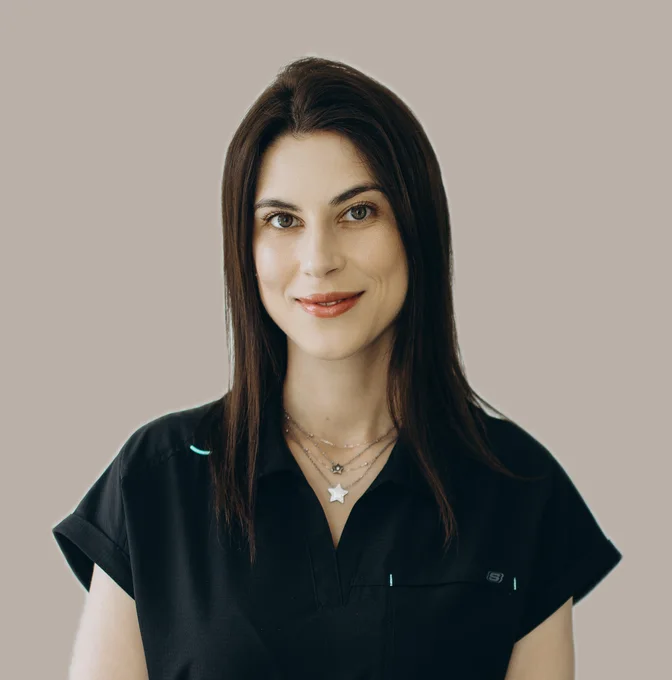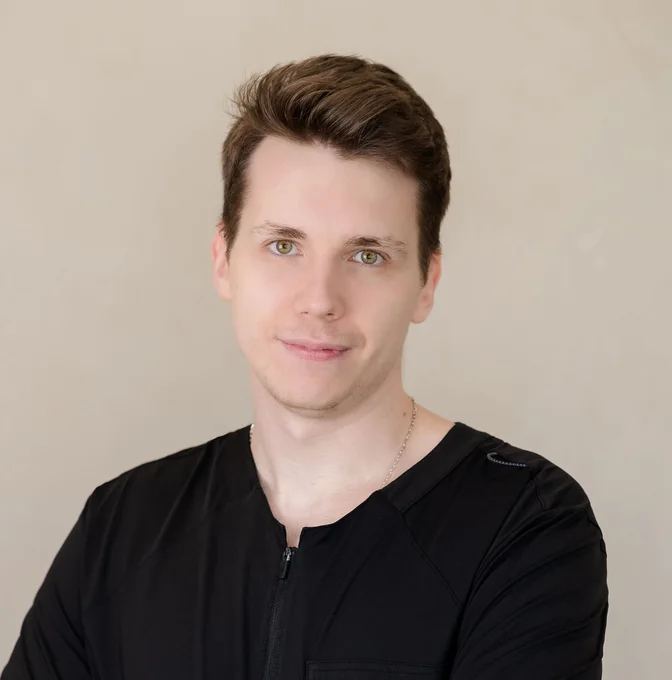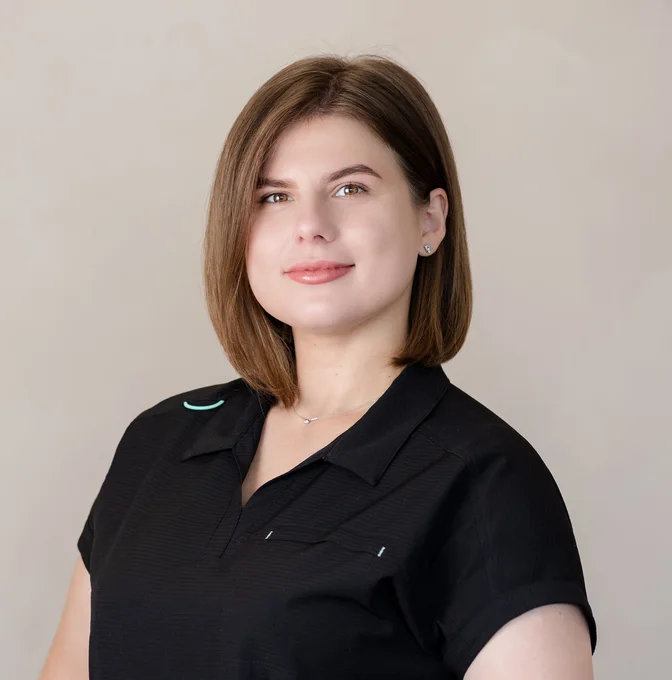

SHÉVCHYK Vision Space surgeons at the laser system during vision correction

Laser eye surgery at SHÉVCHYK Vision Space in Kyiv

Who laser vision correction is for

Laser correction may be recommended for patients who want to stop wearing glasses or contact lenses entirely. The final decision is made after a comprehensive ophthalmic examination.

  • Myopia (short-sightedness) — Laser eye surgery

    Myopia (short-sightedness):

    correction of myopia up to −10.0…−12.0 dioptres, depending on the anatomy of the eye and the chosen technique.

  • Astigmatism — Laser eye surgery

    Astigmatism:

    correction of irregular light refraction that causes blurred and distorted images; when indicated, up to 5.0 dioptres.

  • Hyperopia (long-sightedness) — Laser eye surgery

    Hyperopia (long-sightedness):

    correction up to +4.0 dioptres, depending on the individual characteristics of the eye.

  • Age-related vision changes (presbyopia) — Laser eye surgery

    Age-related vision changes (presbyopia):

    patients over 40 may be offered the Supracor technique, which reduces dependence on glasses for near work.

  • General criteria:

    age 18 to 45, stable refraction over the past 12 months, sufficient corneal thickness and suitable corneal parameters, no progressive corneal disease and no acute inflammatory eye disease.

  • Important:

    realistic expectations of the surgical outcome and the ability to follow the post-operative recommendations are mandatory.

How the pre-operative
diagnostics work

  • Uncorrected and corrected visual acuity testing.
  • Autorefractometry and subjective refraction.
  • Cycloplegic refraction, after pupil dilation.
  • Intraocular pressure measurement.
  • Pachymetry: measurement of corneal thickness.
  • Computerised corneal topography and tomography, assessment of the anterior and posterior surfaces.
  • Analysis of corneal biomechanical and morphological parameters.
  • Pupil diameter measurement under different lighting conditions.
  • Assessment of the tear film and ocular surface.
  • Slit-lamp biomicroscopy of the anterior segment, examination of the retina and optic nerve after pupil dilation.

  • Stop wearing soft contact lenses 5–7 days before the examination.
  • Rigid gas permeable lenses — at least 3–4 weeks before.
  • Orthokeratology lenses — 1–3 months before, depending on the characteristics of your cornea.
  • Do not wear eye makeup on the day of the examination.
  • Bring your previous glasses or contact lens prescriptions and a list of the medications you take regularly.

  • The examination takes 1.5–2.5 hours on average, depending on the complexity of the case.
  • Pupil-dilating drops are used: for several hours you may have blurred vision, light sensitivity and difficulty seeing up close.
  • Driving after the diagnostics is not recommended — arrange for someone to accompany you or for transport.
  • The purpose of the diagnostics is not to confirm surgery at any cost: the doctor may recommend a different correction method or postpone the procedure.
Consultation before laser vision correction

Advantages of treatment at SHÉVCHYK Vision Space

Diagnostics before decisions

An examination should give the doctor the information needed to make a diagnosis and choose further treatment. So the number of tests in itself is not a measure of the quality of diagnostics.


Technology as the doctor’s tool

Modern equipment helps obtain precise data, plan treatment and monitor its results. But technology works together with the specialist’s clinical experience, not instead of it.

From diagnostics to recovery

Consultation, the necessary diagnostics, treatment and result control form a consistent patient pathway.

An honest conversation about treatment options

We explain not only the advantages of the recommended method, but also its limitations and possible alternatives.
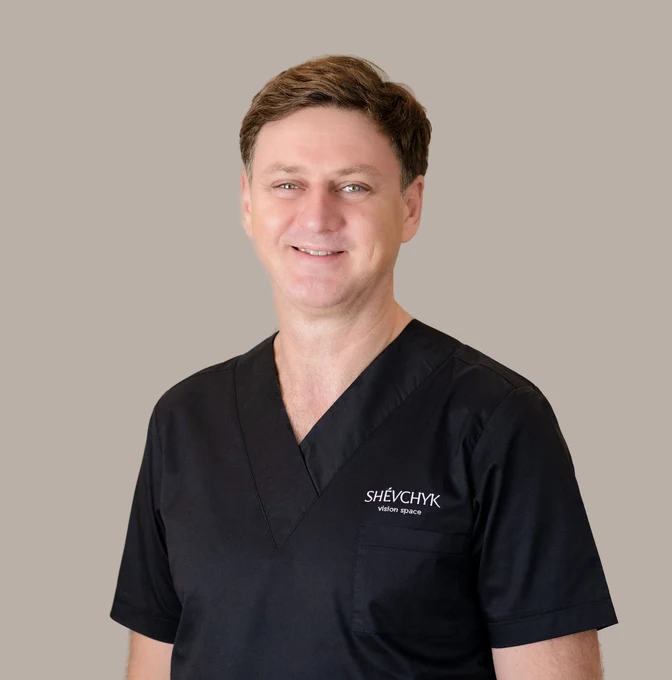

Leading specialists of the clinic

Meet the team
Specialisation

Your journey at SHÉVCHYK
Vision Space

Learn more about us
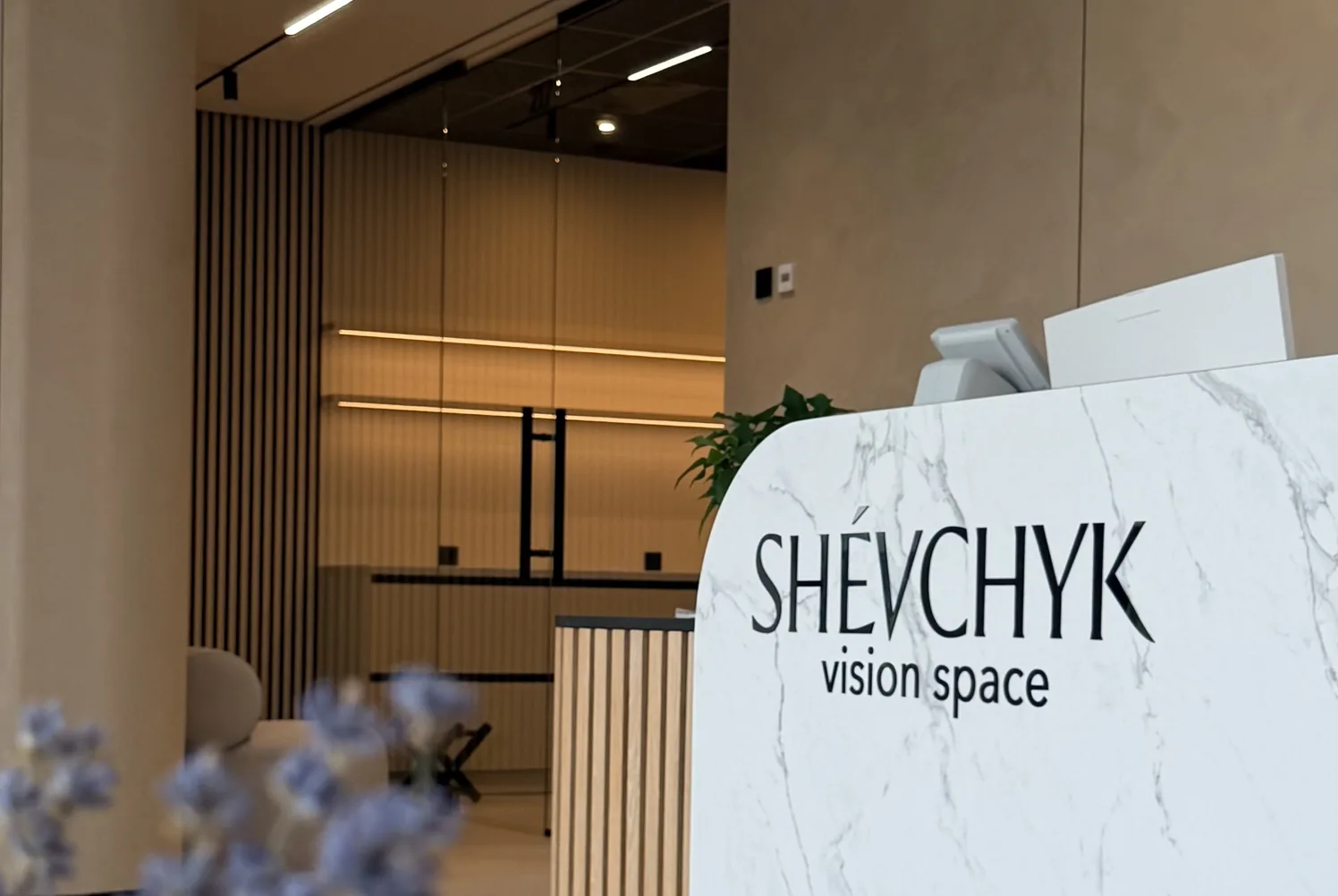
The clinic’s waiting area
  1. 01

    Booking

    You choose the service you need or describe your problem to the administrator, who helps plan the first visit.

  2. 02

    Consultation

    The doctor clarifies your complaints and medical history and performs an initial clinical assessment.

  3. 03

    Diagnostics

    If needed, tests are performed to clarify the diagnosis and choose further treatment.

  4. 04

    Treatment plan

    After analysing the results, the doctor may recommend observation, medication, optical correction, or laser or surgical treatment.

  5. 05

    Treatment

    You undergo the recommended procedure or course of treatment according to the agreed plan.

  6. 06

    Result control

    If necessary, the doctor schedules follow-up examinations and repeat tests to assess the result and the dynamics of your condition.

How the operation works

Before surgery

The surgery is performed on an outpatient basis; after a short preparatory examination the patient enters the operating theatre.

Operating theatre

A dedicated room with the TENEO 317 laser system, which operates at a high frequency with automatic eye tracking.

Do I need someone to accompany me

Recommended, as driving after surgery is not allowed because of possible watering and blurred vision.

After surgery

After the necessary post-operative check, the patient leaves the clinic the same day.

When laser correction
is not performed

Temporary restrictions

  • Progressing refractive error.
  • Pregnancy and breastfeeding.
  • Acute inflammatory eye disease.
  • Decompensated dry eye syndrome.
  • Recent eye surgery.
  • Taking certain systemic medications, including systemic retinoids.
  • Exacerbation of chronic diseases.

Absolute contraindications

  • Progressive keratoconus, other ectasias, marked corneal dystrophies and corneal scarring in the optical zone.
  • Severe dry eye syndrome that does not respond to treatment, and active inflammatory ocular surface disease.
  • Uncontrolled glaucoma, active uveitis, retinal and optic nerve disease that limits visual potential.
  • Uncontrolled autoimmune and immunodeficiency conditions, connective tissue diseases with impaired healing.
  • Unstable refraction and unrealistic expectations of the outcome.

Trusted by patients: 4.5/5 on Google

Over 200 real stories of patients who entrusted us with their vision and beauty.

View all reviews
  • Patient
    Lower eyelid blepharoplasty

    Today I saw my cosmetologist and realised I don't regret any of the things I've had done. I don't think I'm losing my identity, and I'm definitely not obsessively chasing perfection. My best decision was the blepharoplasty (removing the fat bags under my eyes).

    Doctor: Kseniia Rymar

  • Iryna D.
    Laser vision correction

    I had laser vision correction at this clinic. Everything was great: the service, the care and the attitude towards patients. I'm especially grateful to Kateryna Ihorivna Lysenko — she is not only a wonderful doctor with a capital D and a true professional, but also a very good person.

    Doctor: Kateryna Lysenko

  • Patient
    Eyelid surgery

    I had eyelid surgery — Kseniia Oleksandrivna… you're a magician… Everything was done incredibly well, precisely and professionally. To say I'm happy with the result is an understatement — I'm genuinely thrilled. Thank you!

    Doctor: Kseniia Rymar

  • Oksana K.
    Laser vision correction

    I also had laser vision correction with you a month ago, and I can say your team is wonderful. You give people the joy of seeing — it's a completely different quality of life. You give that incredible feeling of waking up in the morning and enjoying every little detail around you. It's amazing — thank you so much.

    Doctor: Kateryna Lysenko

  • Patient
    Aesthetic eyelid surgery

    I want to say thank you for the result once again. Every day I seem to notice more how it has changed my appearance — everything is just as it should be. I think I even look younger. I'm so, so happy that I took the plunge and chose you!

    Doctor: Kseniia Rymar

  • Patient
    Laser vision correction

    I wanted to thank you personally for my successful laser vision correction, and especially Kateryna Ihorivna Lysenko. She is such a lovely doctor — there are no limits to my gratitude; it's the first time I've met someone like her. Thank you so much, and especially Kateryna Ihorivna: outstanding and very caring.

    Doctor: Kateryna Lysenko

  • Patient
    Aesthetic eyelid surgery

    Kseniia, thank you so much. I was really glad to meet you and I'm very grateful for your care and for the surgery you performed. From the bottom of my heart — I was glad to be your patient. I'll come and see you again when I'm back. The result is very good. Sincere thanks!

    Doctor: Kseniia Rymar

  • Patient
    Laser vision correction

    Oh, Kateryna Ihorivna is the best. I had laser correction with her a month ago.

    Doctor: Kateryna Lysenko

  • Patient
    Aesthetic eyelid surgery

    Endless thanks for your professionalism, your golden hands and your kind heart. Thank you for the beauty you create and for the incredible emotions you give. Thank you for coming into my life and making me more beautiful and happier.

    Doctor: Kseniia Rymar

Techniques and recovery

TransEpi PRK (No-Touch) — no-touch technique
  • The only fully no-touch technology: all stages are performed by the excimer laser, without surgical instruments or a corneal flap. 8–10 minutes for both eyes, laser time up to 25 seconds.
  • Advantages: preserved corneal biomechanical strength, high ablation accuracy, no flap-related risks.
  • Days 1–4: epithelial healing, discomfort of varying intensity is possible; a bandage contact lens is placed on the eye.
  • Days 5–7: the lens is removed, light sensitivity and discomfort decrease, vision begins to stabilise.
  • 2–4 weeks: gradual improvement in visual acuity, most patients return to their usual lifestyle.
  • 1–3 months: main stabilisation of the refractive result, improved contrast sensitivity.
LASIK — the most common technique
  • The most widely used and most thoroughly studied technique: a thin flap is created, the laser reshapes the deeper corneal layers, and the flap is replaced without stitches. 15–20 minutes for both eyes, laser time up to 15 seconds.
  • First hours: watering, light sensitivity, a foreign body sensation and blurred vision are possible — they gradually subside.
  • First day: significant improvement in vision within a few hours, minimal discomfort, follow-up examination by the doctor.
  • First week: visual acuity stabilises, return to work; limit strenuous activity and avoid eye injury.
  • First month: adaptation and development of the visual result, less eye dryness.
  • 1–3 months: most patients have a stable post-operative result.
LASEK — surface technique
  • A surface technique without creating a flap from the deeper corneal layers: the epithelium is gently loosened with a solution, the laser reshapes the cornea, and a therapeutic lens is placed on the eye. Local anaesthesia with eye drops, a few minutes.
  • May be recommended for a relatively thin cornea, certain anatomical features of the surface, and for professions and sports where a flap is best avoided.
  • First 3–5 days: healing of the surface layer; a foreign body sensation, watering, light sensitivity and moderate pain are possible.
  • Days 5–7: the bandage lens is removed, discomfort decreases, visual acuity improves.
  • 2–4 weeks: further stabilisation of vision and return to your usual lifestyle.
  • 1–6 months: corneal remodelling and development of the final result.
Supracor — correction of age-related vision changes
  • A personalised technique for patients with presbyopia: the laser creates an aspheric corneal profile for near, intermediate and distance vision.
  • Recommended mainly for ages 40–60 with stable refraction and sufficient corneal thickness, combined with correction of myopia, hyperopia or astigmatism if needed.
  • May not be suitable in cases of significant cataract, retinal disease, corneal pathology, uncontrolled glaucoma, severe dry eye or unrealistic expectations.
  • First days: initial visual recovery and adaptation to the new way of focusing; fluctuating vision, light sensitivity, dryness and halos around light sources are possible.
  • First weeks: vision at different distances improves, neuroadaptation continues.
  • 1–6 months: stabilisation of the functional result; neuroadaptation may take longer for near work.
  • The goal of the technique is not “perfect” vision at all distances, but the greatest possible reduction in dependence on glasses in everyday life.
Possible complications
  • Temporary effects in the first days and weeks: dry eyes, light sensitivity, watering, fluctuating visual acuity, halos and glare in the dark, a foreign body sensation.
  • Surface techniques: corneal haze, delayed epithelial healing, pain in the early period.
  • Flap techniques: flap displacement or damage, diffuse lamellar keratitis, epithelial ingrowth.
  • Common to all techniques: undercorrection or overcorrection, regression of the refractive effect, dry eye syndrome, extremely rare infectious complications and corneal ectasia.
  • The main method of prevention is careful patient selection based on the results of comprehensive diagnostics and regular post-operative follow-up.
If laser correction is not suitable
  • Refractive lens exchange (RLE): correction of myopia, hyperopia and astigmatism, elimination of presbyopia, prevention of age-related cataract.
  • Premium multifocal and EDOF lenses: functional vision at different distances and less need for glasses.
  • Contact lens correction: soft, toric, multifocal and rigid gas permeable lenses.
  • Correction with glasses: single vision, astigmatic, progressive, office and occupational glasses.
  • Treatment of corneal pathology: cross-linking, implantation of intracorneal ring segments, specialised contact lens correction.
A patient after laser vision correction

Price of laser vision correction

UAH 25,000 per eye regardless of the chosen technique. This way the doctor recommends a treatment option based solely on safety and effectiveness for the patient.

Laser vision correction

When needed: myopia, hyperopia or astigmatism, the wish to stop wearing glasses and contact lenses every day, and discomfort from using them.

ServicePrice
LASIK 25,000 ₴
LASEK 25,000 ₴
TransPRK 25,000 ₴
Enhancement 12 500 ₴

Consultation and diagnostics

When needed: blurred vision, fatigue, pain, dryness or a “gritty” feeling in the eyes, flashes, floaters or regular preventive check-ups.

ServicePrice
Ophthalmologist consultation from 2,000 ₴
OCT 1,000 ₴
Consultation with Vasyl Shevchyk 3,500 ₴

Frequently asked questions

Where do I start if I don’t know which service I need?

Start with a consultation. The ophthalmologist will assess your complaints and the condition of your eyes and decide whether further diagnostics are needed. If your question concerns aesthetic medicine, the administrator will help you book the right specialist.

Do I need full diagnostics before every consultation?

No. The scope of the examination is determined by the doctor based on your complaints and the results of previous visits.

Can I have a consultation and diagnostics in one place?

Yes. Consultation, diagnostics and treatment take place within one centre, often in a single visit.

Is laser vision correction suitable for everyone?

No. Suitability is determined by diagnostics: corneal thickness, vision stability and concomitant conditions.

Can I come for a preventive eye check-up if nothing bothers me?

Yes, and it is worth doing regularly — some eye diseases have no symptoms in the early stages.

How do I book an appointment?

Fill in the form on the website or call the administrator — they will choose a doctor and a convenient time for you.

Book a consultation

Accessibility

Text size

Your choice is saved in this browser.

Accessibility statement